[Prachachat Turakij] Decoding 25 Years of Telenor Asia with Jon Omund Revhaug: Unveiling the ‘AI Strategy’ Blueprint and Principles of ‘Inclusive, Sustainable’ Growth
![[Prachachat Turakij] Decoding 25 Years of Telenor Asia with Jon Omund Revhaug: Unveiling the ‘AI Strategy’ Blueprint and Principles of ‘Inclusive, Sustainable’ Growth](https://www.telenorasia.com/wp-content/uploads/2025/12/1-scaled-2880x1080-c-default.jpg)
[Prachachat Turakij] Decoding 25 Years of Telenor Asia with Jon Omund Revhaug: Unveiling the ‘AI Strategy’ Blueprint and Principles of Inclusive, Sustainable Growth
View original article (in Thai) on Prachachat Turakij’s website
The monumental digital transformation is currently reshaping the globe, and Asia is rapidly becoming the world’s fastest-paced hub for this digital transition. Connectivity is no longer limited to personal communication; its scope has expanded to become a critical infrastructure that sustains national economies, societies, and security.
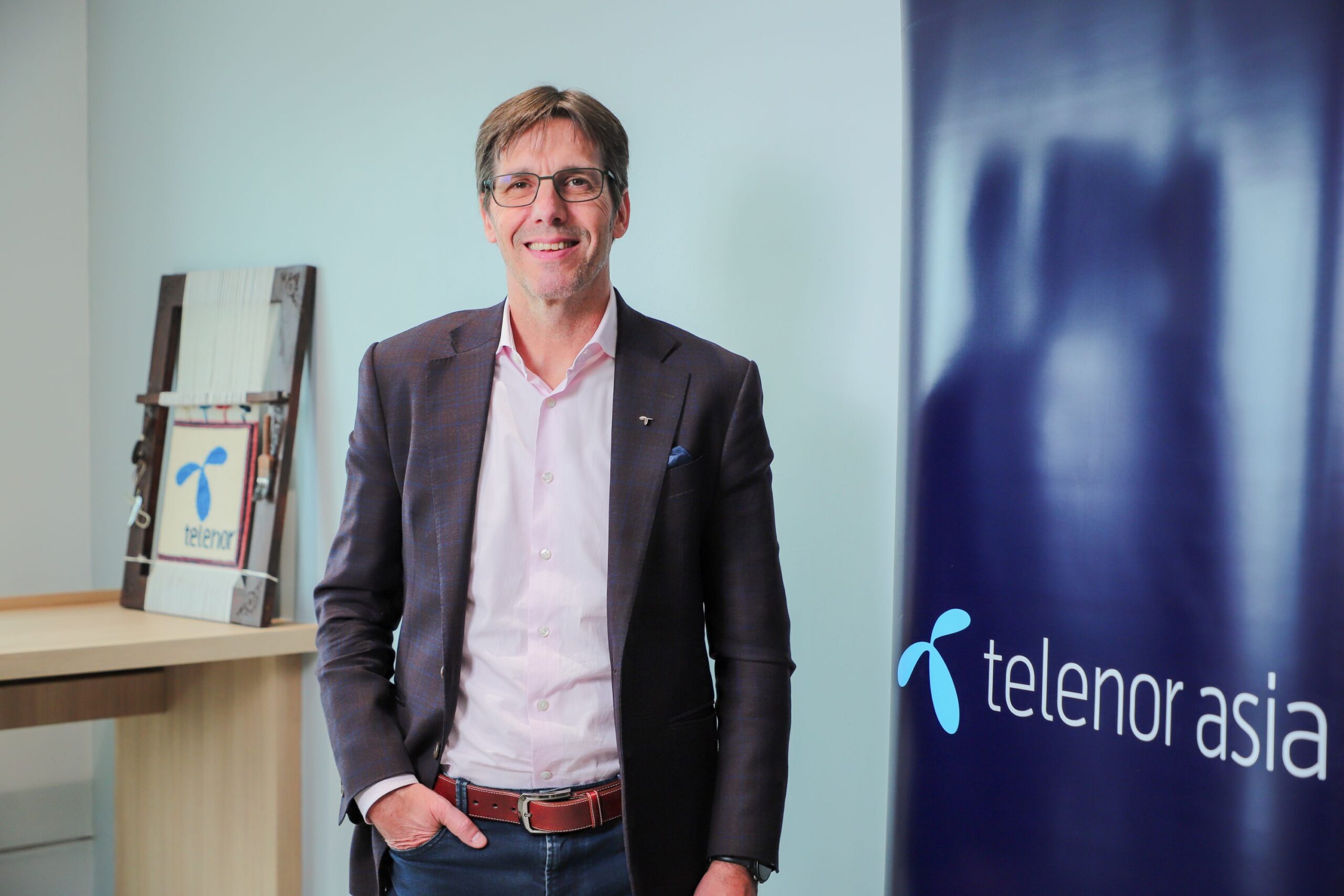
Amidst this relentless wave of change, leaders in the telecommunications industry must possess a sharp vision to keep pace with the demands of the future. Today, we are honored to sit down with Jon Omund Revhaug, Head of Telenor Asia, a veteran at the Telenor Group for over 25 years, and more than 15 years of experience working in Asia. He also served as one of the key architects behind the historic merger between True and Dtac.
Jon Omund firmly believes that the next 5 to 10 years will mark a massive transformation where technologies like 5G and Artificial Intelligence (AI) will play a more dominant role than ever before. However, this growth cannot be fully realized without the crucial principles of inclusivity and sustainability.
In this conversation, Jon Omund shares the perspective of Telenor Asia, the Norwegian telecommunications provider best known to Thai people as the former owner of ‘Dtac.’ He will also discuss the new role of mobile technology in a digital society, the development of the region’s infrastructure, and the story behind the True-Dtac merger, which was aimed at creating Thailand’s Digital Growth Champion. Taken together, all of this reflects Telenor’s vision as a ‘long-term partner,’ one that is laying the foundation to drive the steady growth of Thai and Asian society in an AI-dominant world.
The True-Dtac Merger Mission: Creating a ‘Digital Champion’ to Drive the Nation
Jon Omund points out that building a digital infrastructure capable of supporting sustainable growth required the strength of a robust partner with sufficient business scale to accommodate massive investments in technology. This marked the beginning of the cooperation with the Charoen Pokphand Group (CP Group), which led to the merger between True and Dtac, effectively laying the foundation to define the long-term direction of the Thai telecommunications market.
The result of this merger has built greater strength, transforming True into Thailand’s Digital Champion that is ready to advance service development and deploy AI innovation to drive the nation forward. This gives the company sufficient scale to become a driving force for the country’s digital transformation.
Throughout the two-plus years following the merger, Jon Omund explained that Telenor Asia’s core strategy has been to dedicate resources to supporting the new organization’s integration across its structure, networks, and IT systems. This effort is encapsulated by the slogan ‘Better Together,’ which communicates the unified power of both cultures to create something new and superior.
Therefore, the true definition of success for Telenor isn’t measured solely by financial performance or the creation of synergy. It also includes building an organizational culture ready to drive innovation, and most importantly, establishing a stable and sustainable organization that delivers value to customers, employees, and shareholders simultaneously.
This success, measured by strong results, confirms that the time has come for core technologies like 5G and AI to become the essential foundation for growth in the next era.
5G: The New Foundation of Modern Society
Given that Asia is a predominantly mobile-first region for internet usage, connectivity via mobile networks remains crucial, especially as 5G takes on a new role as a digital infrastructure fundamentally different from previous eras.
While considering the former role of mobile networks (2G-4G), which merely served to connect people, 5G technology will move far beyond that. It will become the critical foundation for advanced services that drive modern society, including systems ranging from public transportation and emergency management to national defense systems and Smart Cities.
AI Strategy and Responsible AI
These transformations won’t be complete without Artificial Intelligence (AI), which acts as a crucial driving force. Because AI helps create unprecedented new services, it significantly enhances the importance of digital infrastructure, making it the foundation for every future system.
However, given the immense potential of AI, its deployment must be accompanied by the highest level of responsibility. This is why Telenor has established a blueprint for Responsible AI to create technology that is reliable, secure, and appropriately meets customer needs.
Based on this philosophy, Telenor is moving forward to tackle the new wave of technology that is AI. Jon Omund explains the strategy and approach for responsibly applying AI in the telecommunications industry, dividing it into two main areas:
The first area is using AI for enhanced efficiency, which includes both cost reduction and intelligent network management. This also involves creating differentiation through a deep understanding of the customer, leading to ‘Hyper-Personalization’—the ability to precisely meet customer needs and adapt to changes throughout their lives.
The second area is building trust and robust AI governance. Jon Omund emphasizes that the responsible use of AI is paramount. Telenor upholds the principles of human rights and data privacy through global cooperation frameworks by organisations such as Singapore’s AI Verify Foundation and the GSMA Responsible AI Framework, to ensure the creation of technology that is both trustworthy and transparent.
Furthermore, Telenor has also started its first AI data center in Norway. This center is completely controlled and operated domestically, serving as a secure and data sovereign solution.
When asked about the difference between humans and Artificial Intelligence, Jon Omund offers a simple comparison using the Olympics: “Imagine the world’s best athletes. They meet every four years, and an athlete’s performance might improve by about one percent per year. So, in the four years leading up to the next Olympics, performance might improve by about four to five percent. Meanwhile, technology today can improve by a thousandfold per year—far exceeding what humans can do daily. That is why technology is so powerful and important, but we must be careful to deploy it appropriately to meet customer needs.”
The Challenge in ASEAN: ‘Inclusive’ and ‘Sustainable’ Growth
While digital transformation offers enormous opportunities, Jon Omund believes that the most significant opportunity and challenge for the ASEAN market is developing digital technology and AI in an ‘Inclusive’ and ‘Sustainable’ manner to ensure balanced future societal growth.
Jon Omund notes that one of the region’s major challenges is closing the digital divide. Therefore, we must ensure that everyone has equal access to technology. Telenor has undertaken numerous projects through True to build digital skills for consumers, customers, and employees alike. These efforts focus on developing digital and AI frameworks through training and collaboration with partners.
Sustainability is another key pillar for Telenor, with a focus on reducing greenhouse gas emissions in line with the standards of the Science Based Targets Initiative (SBTI). This is achieved through the following strategies:
- Using Renewable energy: Procuring Energy Attribute Certificates (EACs) and implementing Power Purchase Agreements (PPAs) for renewable energy and collaborating with clean energy developers in both solar and wind power.
- Working with Regulatory Bodies and supply chains: Collaborating with agencies to push for tools and mechanisms that support the use of renewable energy in the telecommunications industry, and working with the supply chain to set their own science-based targets to reduce emmissions. This includes ongoing work in Thailand with True; while in Malaysia, Telenor works with CelcomDigi on a joint, systematic long-term goal for carbon reduction.
Principles of Operation: ‘Respect, Transparency, Honesty’ and the ‘Five Finger Rule’
Reflecting on his career path before taking the position as Head of Telenor Asia, Jon Omund shares that over his 25 years with the company, he has been involved in a wide variety of missions. These include developing telecom infrastructure, securing licenses in India and Myanmar, and serving as CEO of Telenor Procurement Company in Singapore. He then moved on to become CEO of Telenor Myanmar and returned to Thailand during the merger between True and Dtac, ultimately leading to his current role as Head of Telenor Asia.
“From the very first time I arrived in Asia, I was impressed by the energy and ‘can-do’ spirit of the people in every country. I love Singapore for its simplicity; I love Thailand as the ‘Land of Smiles’ that is full of opportunity; I appreciate Malaysia for its unique identity; and Myanmar was an extraordinary experience. Meanwhile, Bangladesh and Pakistan are countries growing with great energy and determination. Every country has its own charm, and I genuinely enjoyed every moment I spent working in each place.”
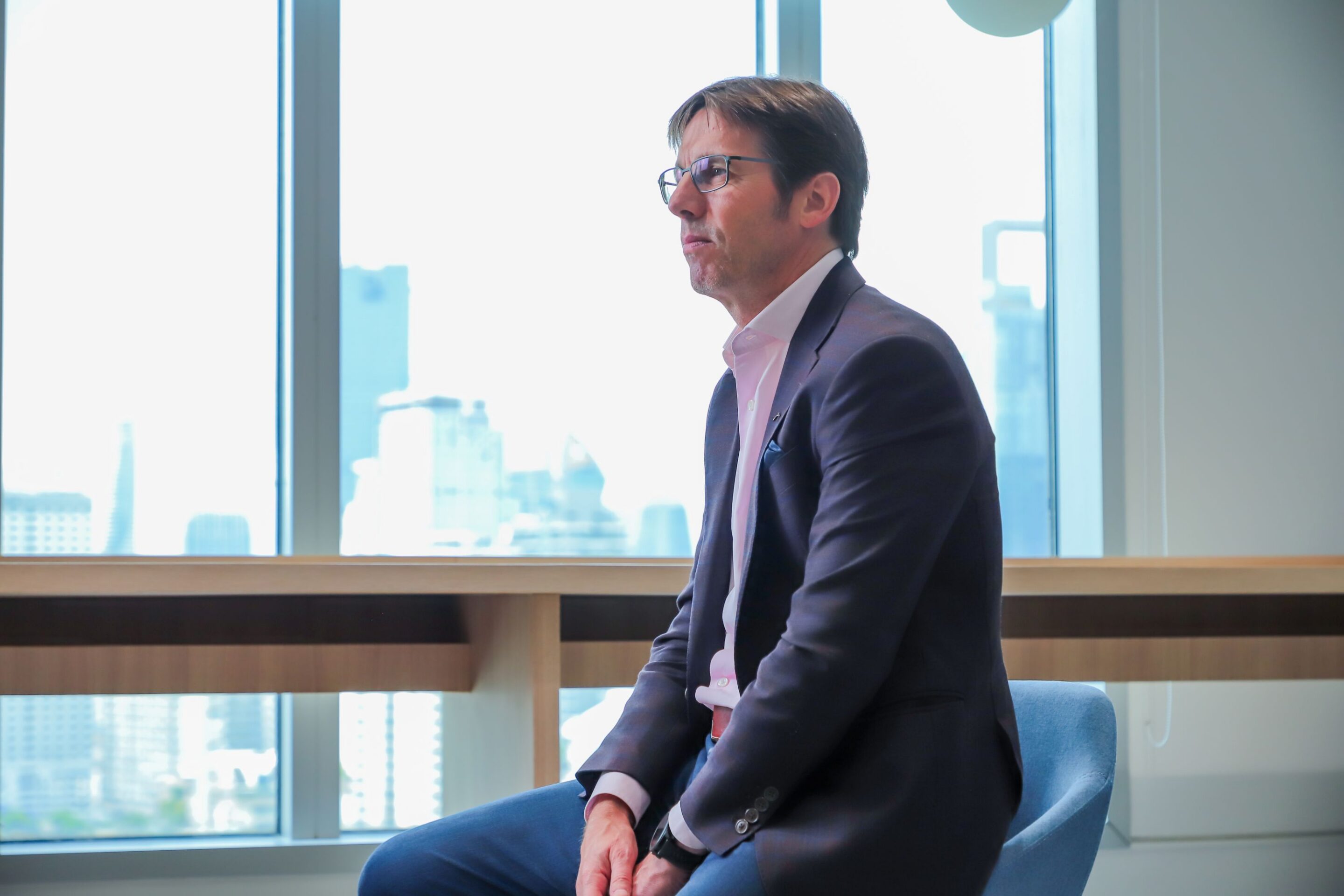
Most importantly, Jon Omund believes that sustainable organizational growth cannot occur without a foundation of the right values. Therefore, his working principles are built upon three essential values:
‘Respect’ means respecting yourself, others, and different cultures, as understanding and acceptance are the starting points for smooth collaboration.
‘Transparency’ is the courage to openly address problems and discuss them straightforwardly to collaboratively find creative solutions.
‘Honesty’ is the bedrock that allows an organization to stand firm, because everyone operates on a foundation of sincerity and trust.
In addition to these core values, what most clearly reflects Jon Omund’s character is his ‘Five Finger Rule,’ a personal philosophy he uses as a guide for work, life, and raising his family.
- The Thumb: Grit – Everything takes time; you need endurance and continuous persistence.
- The Index Finger: Direction – The team and organization must have a clear direction, and the leader must communicate it so everyone understands.
- The Middle Finger: Respect – Treat others with respect and expect it in return.
- The Ring Finger: Relations – Build strong relationships and teamwork to achieve significant change.
- The Pinky Finger: Self-Irony – A small attitude that helps you manage various situations.
These very principles have served as a compass guiding the organization to successfully lay the foundation for massive digital infrastructure in the region, including the major milestone of the True-Dtac merger deal in 2023.
Everything conveyed by Jon Omund Revhaug clearly reflects that Telenor Asia is stepping into a new role as a leader in the digital era and an active owner of True Corporation. Its goals are to connect people, develop infrastructure, and drive inclusive and sustainable growth to help lay the foundation for Asia’s future advancement, all guided by the belief that: “Technology has true value only when it helps elevate people’s lives and creates sustainable benefit for society.”
Article republished with permission from Prachachat Turakij. View the original article in Thai here.